Fire & Explosions
Fire & Explosion
The variations on how a fire may start are many, but with a fire preventive attitude and training in accordance to procedures, the risk is minimised.
In an engine room a non-insulated hot area, leakage of oil and the air in the engine room itself is what it takes for a fire to break out. In cargo, a cigarette, cargo and abundant air can be the contributing factors.
Facts
- In 7 out of 10 cases fires occur when the vessel is on passage at sea.
- Only in one-tenth of the cases studied, did the fire occur during shipyard or drydock operations.
- Most fires start in the engine room and are, in 7 out of 10 cases, caused by fuel oil leakage or a short circuit of electrical equipment.
One-third of the fires originate from cargo spaces.
Preventive measures
Machinery spaces
- Keep a high general standard of cleanliness in the machinery spaces.
- Ascertain that there is no hazardous leakage of oil in the machinery spaces.
- All pipes and fittings should be routinely checked.
- All repairs that are carried out to oil pipes and fittings should be of a permanent nature.
- All high-pressure fuel oil pipes should be properly shielded.
- Ensure that insulation/lagging covers all hot surfaces.
- Ensure that all readily combustible materials are stored away only in designated areas.
- Regularly test that the quick-closing valves are functioning.
- The fire dampers must be functioning and regularly tested.
- Contactors and connections in electrical installations should be regularly checked. All repairs of electric equipment to be performed or supervised by qualified personnel.
- Test that the engine room fire alarm is working properly and be sure that the crew is well aware of the fire fighting and emergency procedures.
Cargo holds
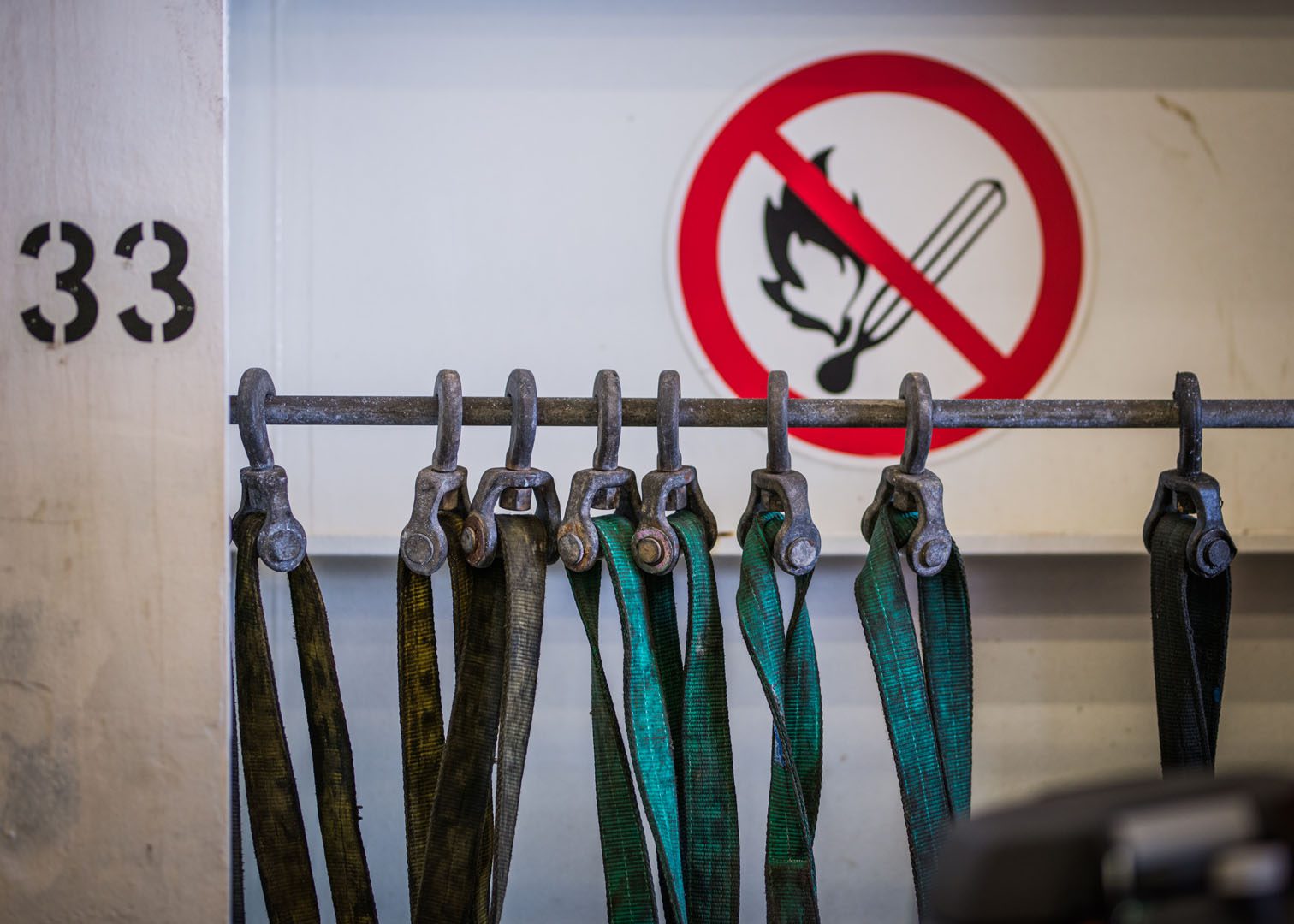
- Smoking must never be permitted in areas where cargo is handled (hold, open hatchways, container, container stuffing area etc.).
- When carrying cargo with a tendency towards self-ignition monitoring of temperatures should be performed and unnecessary ventilation should be avoided.
- Stowing, separation and lashing of dangerous goods must be done according to the IMDG code.
- Securing of cargo on Ro-Ro decks must be arranged so that fire-fighting equipment is unobstructed during loading, discharging and on sea passage.